
Study on Women and Youth in Trade
About the Project
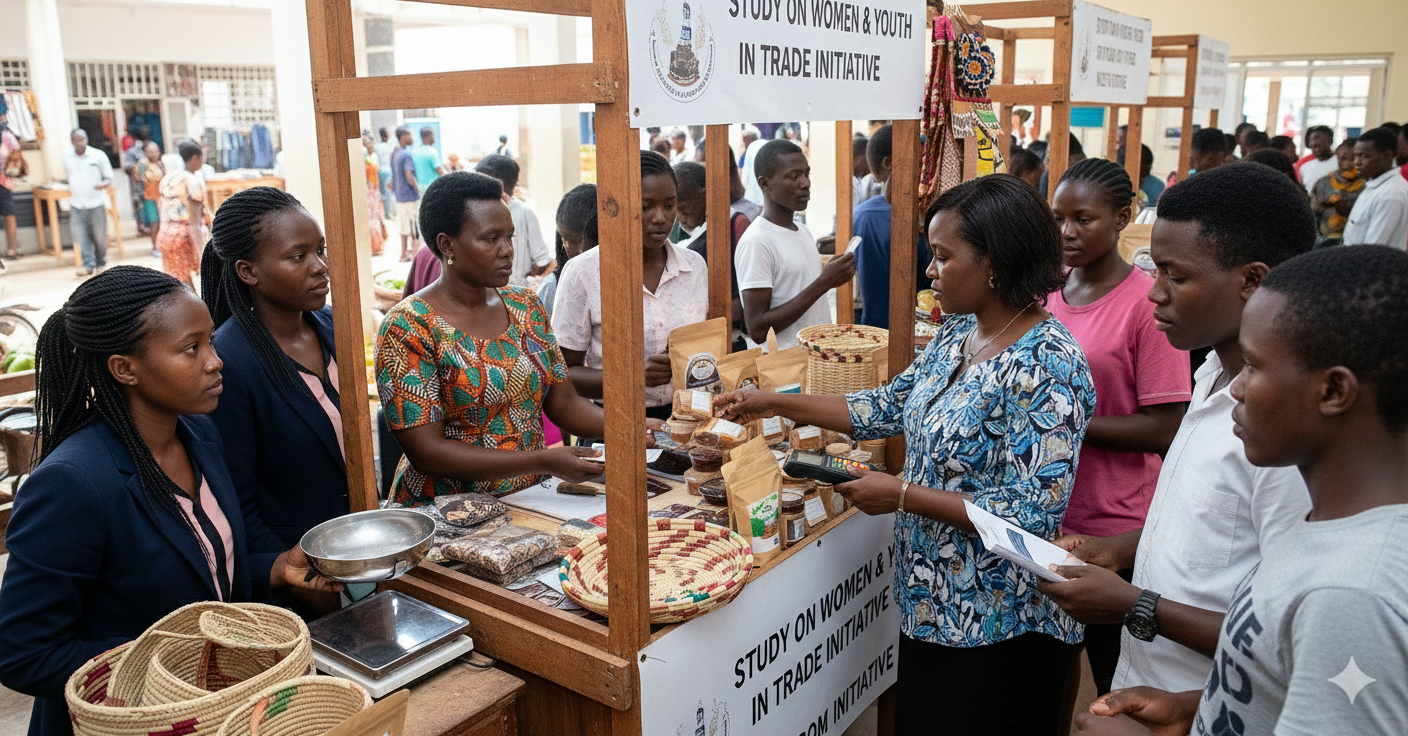
The Study on Women and Youth in Trade was commissioned by GIZ in collaboration with the Ministry of Trade and Industry (MINICOM). The main purpose was to assess the challenges faced by women and youth in trade and explore how they can leverage opportunities under the African Continental Free Trade Area (AfCFTA). The study provides evidence and policy insights to guide Rwanda’s negotiation position for the upcoming Women and under AfCFTA Phase II; III.
Project Focus
− Assess the participation of women and youth in trade (formal and informal,
particularly cross-border trade).
− Identify barriers limiting their access to markets, finance, information, and business
networks.
− Analyze opportunities presented by AfCFTA for inclusive trade participation.
− Develop policy recommendations to enhance women and youth integration into
regional and continental value chains.
− Prepare a position paper to support Rwanda’s policy stance in AfCFTA negotiations.
Key thematic areas covered included:
− Access to trade and market information
− Financial and productive resource constraints
− Trade facilitation, standards harmonization, and policy environment
− Entrepreneurial and digital trade capacity
− Impact of COVID-19 on women and youth traders
Key Insights
- Women and youth dominate informal trade, accounting for about 85% of Rwanda’s cross-border traders.
- Major trading partners include DRC, Uganda, and Tanzania.
- Primary challenges include limited finance, information, management skills, and non-harmonised
trade standards. - Recommendations focus on enhancing trade finance access, capacity building, e-commerce empowerment, and policy harmonisation across AfCFTA member states.
Project Reach
Geographic Coverage
Geographic Coverage: Nationwide (Rwanda) with emphasis on cross-border trade with neighbouring African countries, particularly the Democratic Republic of Congo
(DRC).
Target Groups:
- Women and youth in trade (formal & informal)
- Cooperatives and SMEs engaged in export/import trade
- Government agencies, the private sector, civil society, and trade support
institutions
Key Sectors Involved:
Services (25.3%)
Textile, Fashion & Clothing (19.6%)
Agriculture (18.3%)
Manufacturing (15.8%)