
When vision goes beyond sight: a person with disability, a cooperative leader transforming lives in Musanze
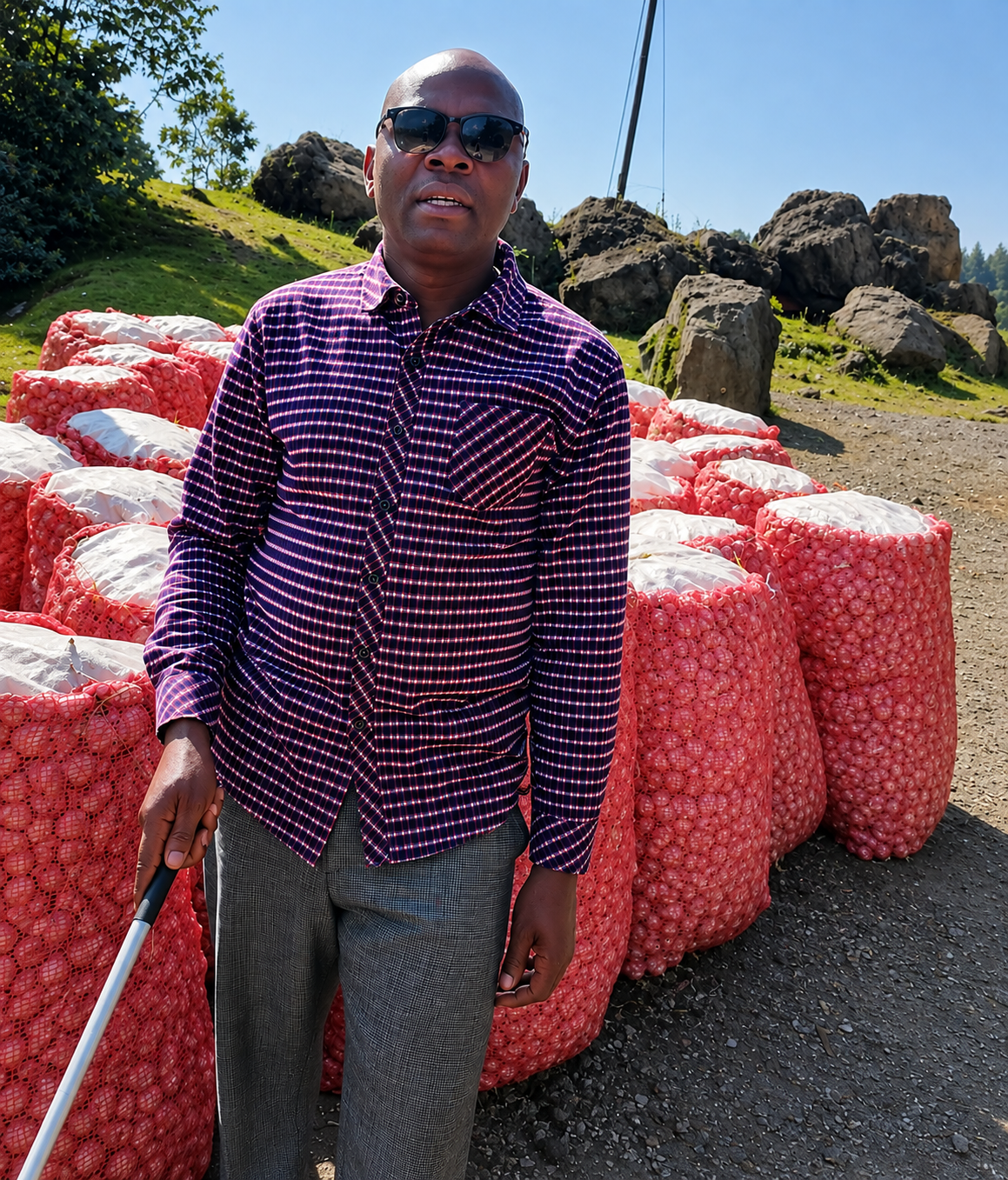
Jean Damascène Sinzabaheza, a person with a visual disability and president of Dukomeze Ubuzima Cooperative, stands beside a potato harvest, highlighting the impact of Center for Development Policy’s support.
When Jean Damascène Sinzabaheza lost his sight, many assumed his ability to lead had disappeared with it. Instead, he found a new purpose.
Today, the father of seven and President of Dukomezubuzima Cooperative in Musanze District is being supported by the Center for Development Policy (CDP) in leading hundreds of people, many of them women, youth, and persons with disabilities, toward greater economic independence and social inclusion.
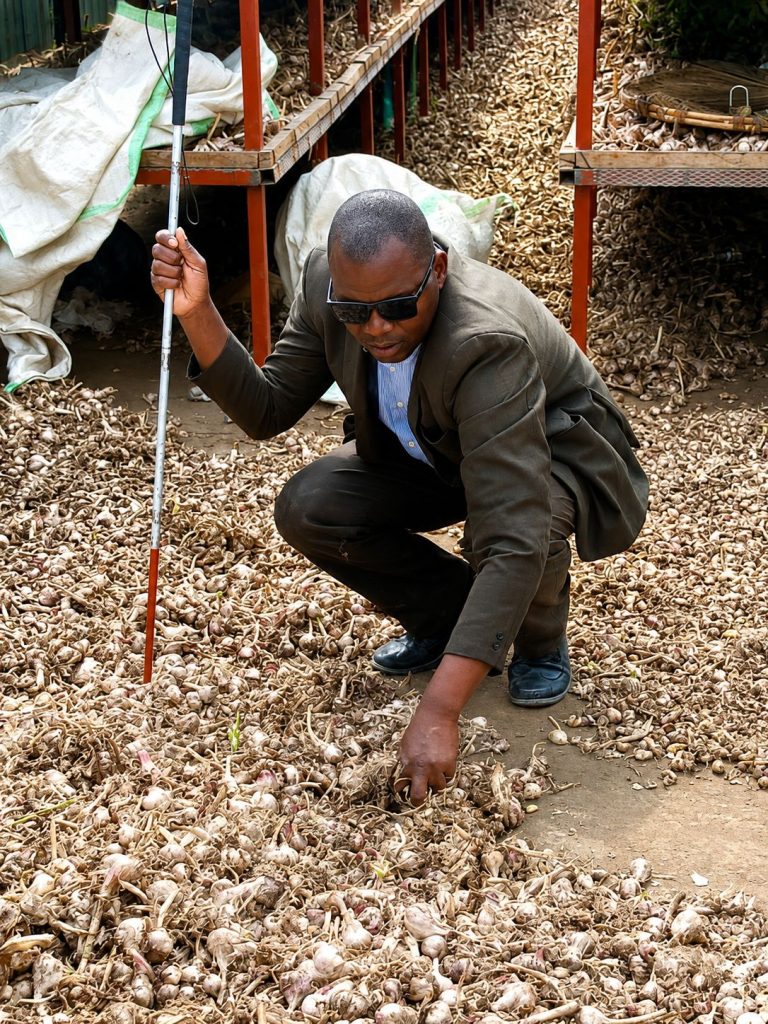
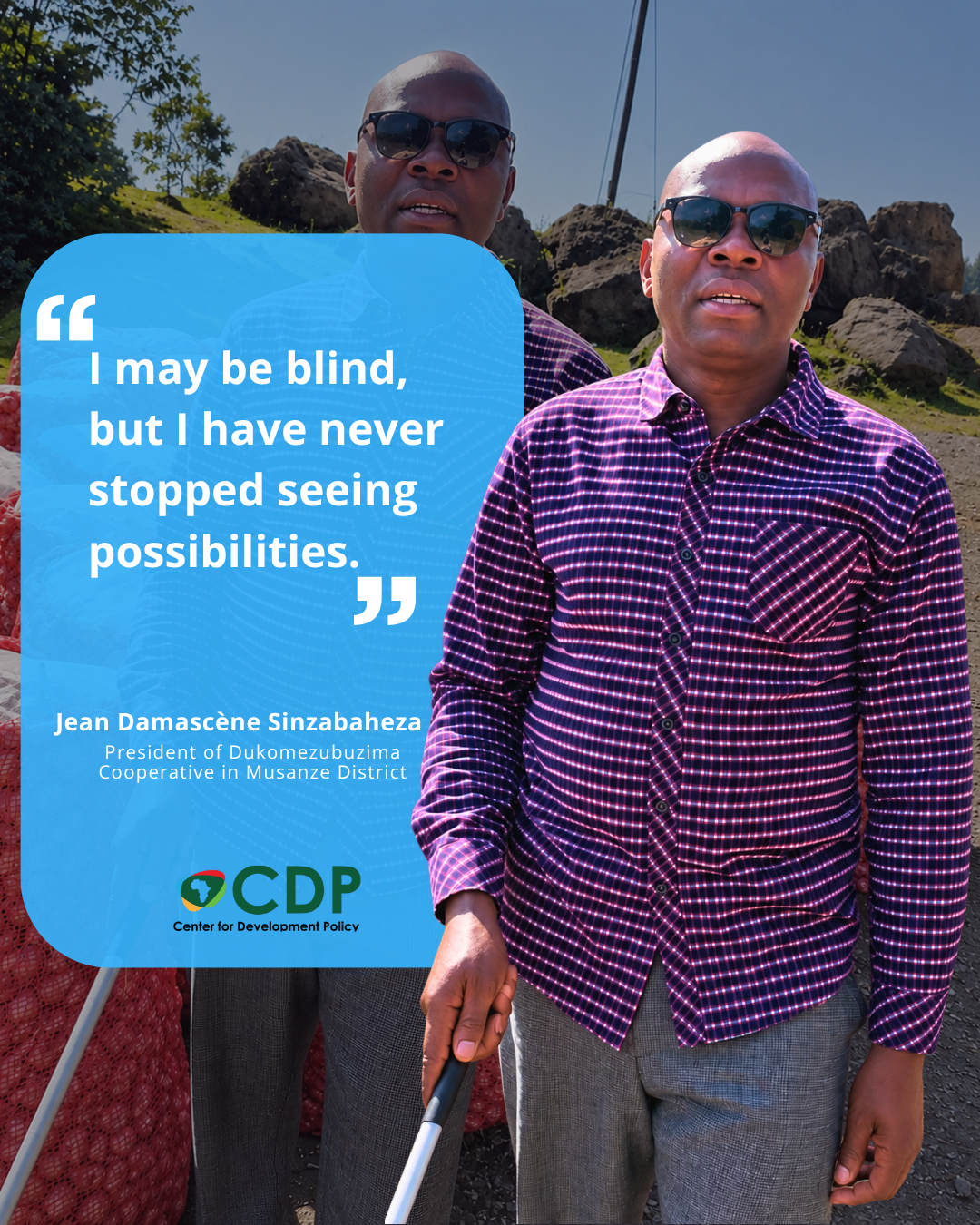
“I may be blind, but I have never stopped seeing possibilities,” Sinzabaheza says.
For over a decade, Dukomezubuzima Cooperative has been working to improve the livelihoods of vulnerable community members through agriculture and small businesses. What began as a small initiative has grown into a thriving cooperative that is changing lives across Musanze.
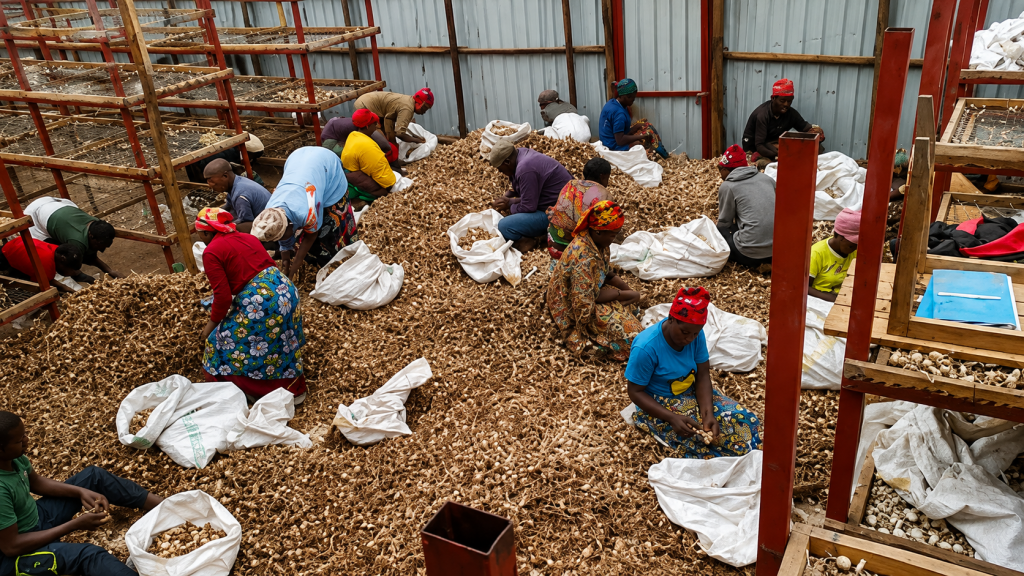
Today, Dukomezubuzima Cooperative has grown to 640 members, comprising 540 women and 100 men. Of these members, 260 are youth, and 380 are persons with disabilities, a testament to its commitment to inclusive development. Within the cooperative, 640 members are organized into 30 groups that perform weekly tontines to strengthen financial resilience.
While agriculture remains its primary livelihood activity, members have diversified into tailoring, hairdressing, arts and crafts, and other small businesses, creating additional sources of income for their families.
Turning challenges into opportunity
Despite its potential, the cooperative once struggled with weak management systems, limited financial accountability, and deeply rooted misconceptions about the leadership abilities of persons with disabilities.
“Many people believed a person with a disability could not effectively manage a cooperative,” Sinzabaheza recalls.
Those perceptions affected hiring practices, governance, and even partnerships with financial institutions. The turning point came in 2025, when the cooperative collaborated with CDP with the support of AGRA in the project of Youth Entrepreneurship for the Future of Food and Agriculture (YEFFA).
Through the project’s proximity Business Development Advisory (BDA) service, the cooperative leadership and staff received intensive training, coaching, and mentorship in financial management, cooperative governance, record-keeping, and inclusive leadership.
The support strengthened not only the cooperative management systems but also the confidence of its leaders. “We learned how to run our cooperative professionally, improve accountability, and increase productivity,” says Sinzabaheza. “That knowledge transformed the way we work.”
One of the most significant changes has been the cooperative’s commitment to inclusion.
Today, people with disabilities are not only members, but they are decision-makers. Of the cooperative leadership committee, the majority are persons with disabilities, demonstrating that leadership is determined by ability, not physical condition.
The cooperative has also adopted more inclusive employment practices, including hiring an assistant accountant who lives with a disability after participating in training on disability inclusion and youth engagement. These changes have helped challenge stereotypes within the community while proving that inclusive leadership strengthens institutions.
Opening doors to finance
Through CDP, support and improved governance also restored confidence among financial partners. Following improvements in accountability and management, Money Phone renewed its partnership with the cooperative and extended a RWF 50 million loan, enabling members to expand their businesses and agricultural production. The cooperative has also established links with the Bank of Kigali, opening opportunities for women members to access collateral-free loans and strengthen their economic activities. For many members, especially persons with disabilities who previously struggled to access credit, these opportunities represent much more than financing.
Meanwhile, the cooperative’s financial and production figures reflect the scale of its growth. During the 2025 season, it recorded a turnover of RWF 36.48 million and made a profit of RWF 1.09 million.
Its productivity also increased, rising from 76 tonnes at the end of 2024 to 480 tonnes by the end of 2025.
The cooperative sells its produce through forward contracts to the Seed Potato Fund (SPF) and Fatima Pastoral, both based in Musanze District. It also supplies markets in Kigali, where sales are made through informal negotiations with different buyers.
Beyond farming
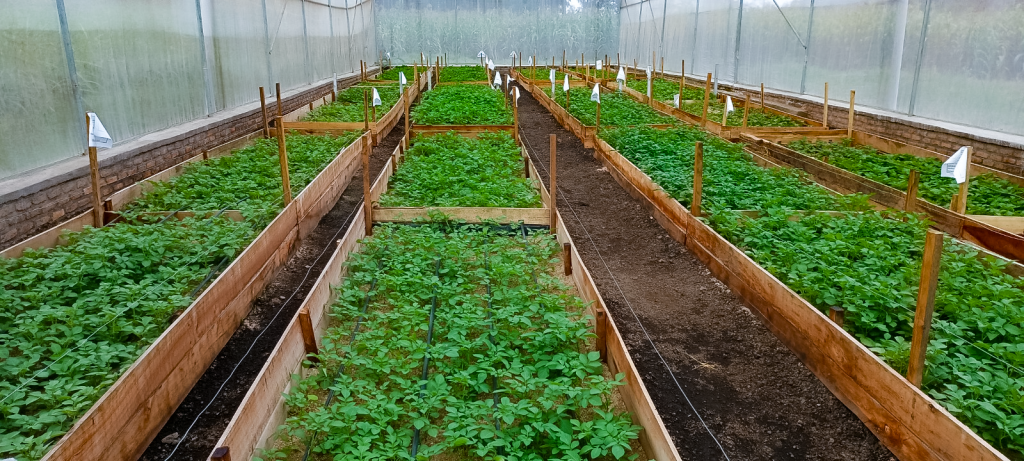
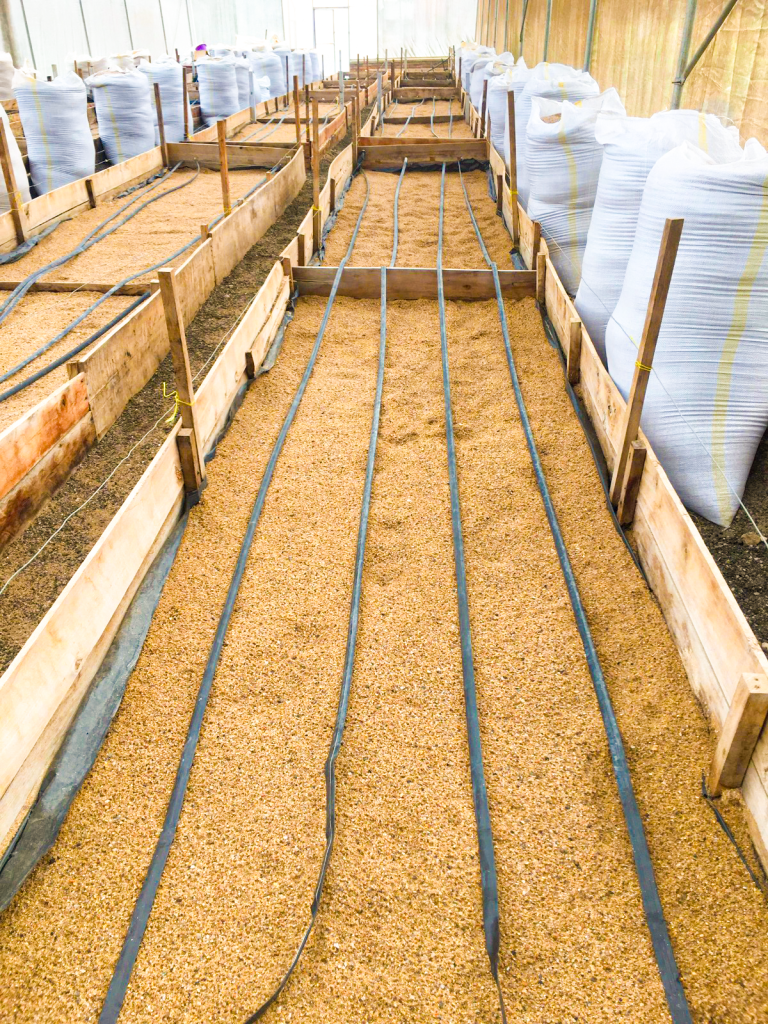
Agriculture remains the cooperative’s primary economic activity. Members cultivate crops in greenhouses and on rented farmland while working towards acquiring additional land to meet growing demand.
However, Dukomezubuzima has evolved into much more than a farming cooperative. It has diversified its economic activities to include tailoring and hairdressing businesses, arts and crafts, and Irembo services. The cooperative also supports members and non-members with health insurance payments, participates in the Ejo Heza long-term savings scheme, and contributes to school feeding programmes for children with disabilities.
The cooperative currently employs 72 permanent staff, including 62 wage employees and 12 office staff. Of the total workforce, 50 are young people, highlighting the cooperative’s contribution to youth employment.
Looking ahead
Although progress has been made, Sinzabaheza believes the journey is only beginning. With a five-year strategic plan developed with support from CDP, the cooperative has set ambitious targets for the years ahead.
The cooperative hopes to increase its capital, address logistical challenges by acquiring its own transport vehicle to improve access to markets, acquire additional farmland and create more employment opportunities, particularly for young people and persons with disabilities.
Sinzabaheza credits CDP, with support from AGRA, not only with strengthening the cooperative’s systems but also with connecting it to strategic partners such as Moneyphone and market actors, including Fatima Pastolare and the Seed Potato Fund (SPF). These partnerships, he says, have accelerated the cooperative’s growth and improved access to affordable financing for its members.
“We have learned that disability is not inability,” he says. “When people are given the right skills, opportunities and support, they can transform not only their own lives but also the lives of entire communities.”
His story is a reminder that true inclusion goes beyond representation. It is about creating opportunities where everyone, regardless of gender, age or disability, can lead, contribute and thrive.
For Sinzabaheza, losing his sight did not end his vision. It simply gave him a different way of helping others see what is possible.
Its productivity also increased, rising from 76 tonnes at the end of 2024 to 480 tonnes by the end of 2025.
The cooperative sells its produce through forward contracts to the Seed Potato Fund (SPF) and Fatima Pastoral, both based in Musanze District. It also supplies markets in Kigali, where sales are made through informal negotiations with different buyers.
Beyond farming
Agriculture remains the cooperative’s primary economic activity. Members cultivate crops in greenhouses and on rented farmland while working towards acquiring additional land to meet growing demand.
However, Dukomezubuzima has evolved into much more than a farming cooperative. It has diversified its economic activities to include tailoring and hairdressing businesses, arts and crafts, and Irembo services. The cooperative also supports members and non-members with health insurance payments, participates in the Ejo Heza long-term savings scheme, and contributes to school feeding programmes for children with disabilities.
The cooperative currently employs 72 permanent staff, including 62 wage employees and 12 office staff. Of the total workforce, 50 are young people, highlighting the cooperative’s contribution to youth employment.
Looking ahead
Although progress has been made, Sinzabaheza believes the journey is only beginning. With a five-year strategic plan developed with support from CDP, the cooperative has set ambitious targets for the years ahead.
The cooperative hopes to increase its capital, address logistical challenges by acquiring its own transport vehicle to improve access to markets, acquire additional farmland and create more employment opportunities, particularly for young people and persons with disabilities.
Sinzabaheza credits CDP, with support from AGRA, not only with strengthening the cooperative’s systems but also with connecting it to strategic partners such as Moneyphone and market actors, including Fatima Pastolare and the Seed Potato Fund (SPF). These partnerships, he says, have accelerated the cooperative’s growth and improved access to affordable financing for its members.
“We have learned that disability is not inability,” he says. “When people are given the right skills, opportunities and support, they can transform not only their own lives but also the lives of entire communities.”
His story is a reminder that true inclusion goes beyond representation. It is about creating opportunities where everyone, regardless of gender, age or disability, can lead, contribute and thrive.
For Sinzabaheza, losing his sight did not end his vision. It simply gave him a different way of helping others see what is possible.