
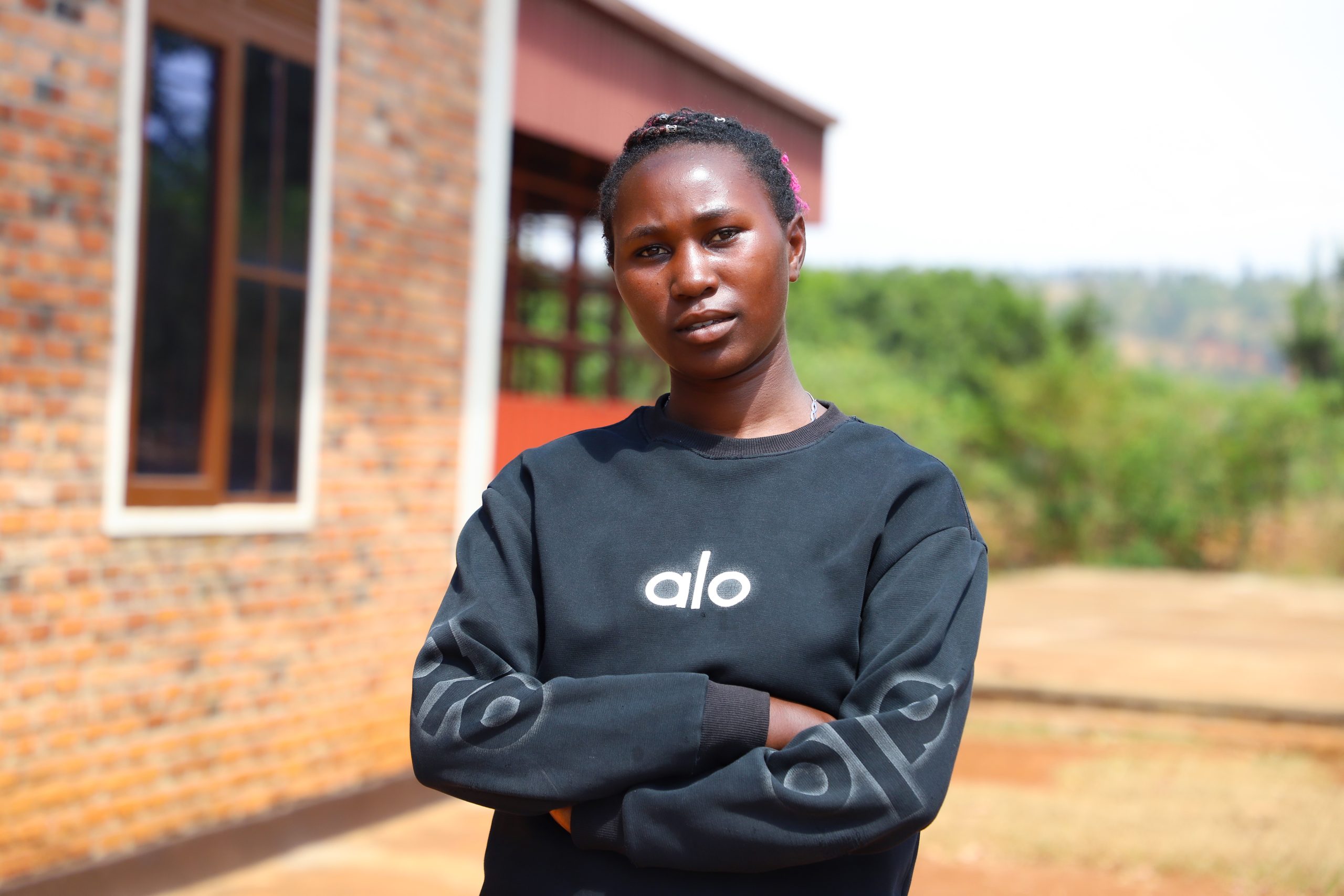
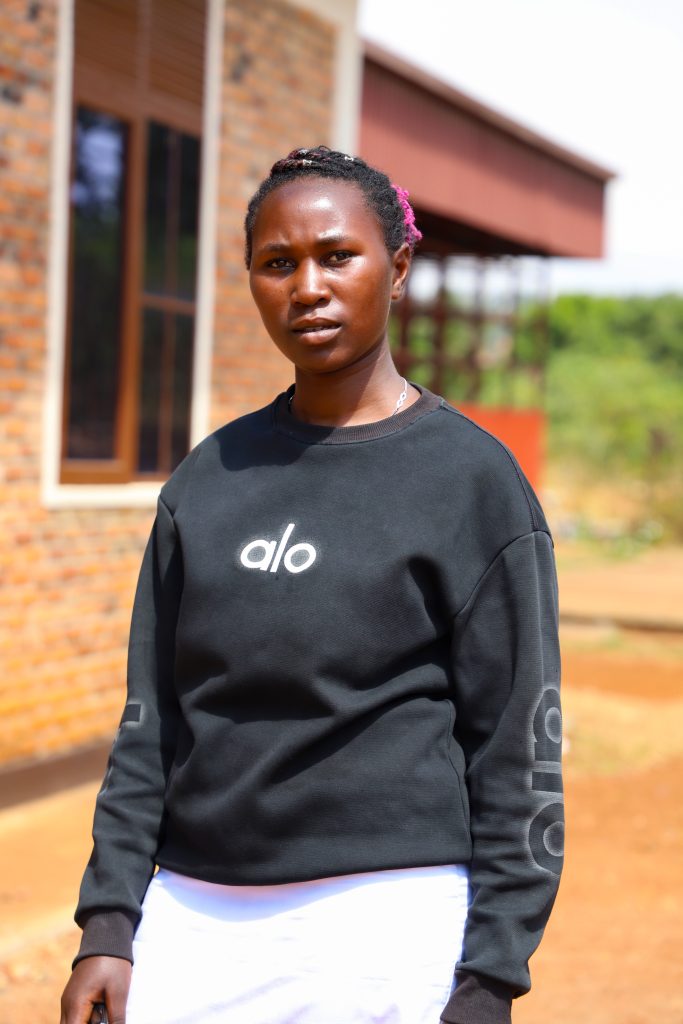
When Clarisse Mushimiyimana dropped out of school in Senior 5 because her parents could no longer afford to support her education, she struggled to accept that the path she had imagined for herself had suddenly changed.
The 22-year-old from Nzige Sector in Rwamagana District had completed her O-Level and hoped to continue her studies. However, when the project that had been supporting her education ended, so did her opportunity to remain in school.
“It was hard to accept it after dropping out of school,” she recalls.
Today, however, Mushimiyimana is building a different future, one rooted in agriculture and strengthened by the power of working together.
In 2024, she joined Hirwa35 Agri-Cooperative, where she began working alongside other farmers cultivating maize and vegetables.
Before joining, she had heard about how people could improve their livelihoods by pooling their efforts through cooperatives. That idea encouraged her to become a member.
“I had heard that when people join efforts and work together, they can develop themselves. That is what encouraged me to join the cooperative,” she said.
Her decision soon began to pay off.
Through support provided to Hirwa35 Agri-Cooperative by the Centre for Development Policy (CDP), members gained improved access to financial services.
Mushimiyimana received a Rwf400,000 loan through Money Phone, part of the Rwf56 million in credit accessed by the cooperative and its members. She invested the money in maize and tomato farming.
However, access to finance was only one part of the support she received.
Through CDP-supported training facilitated under the cooperative, members learnt improved agricultural practices, including the appropriate use of agricultural inputs, when and how to apply them, and how to minimise crop losses.
For Mushimiyimana, applying what she learnt made a noticeable difference.
“I mainly cultivate maize and tomatoes. After the training on using agricultural inputs, when to use them, and how to avoid wasting them, I followed what we were taught. This helped me improve my harvest,” she said.
During one growing season, she harvested 600kg of maize and 1.5 tonnes of tomatoes. She sold the produce, with Solid Africa purchasing her tomatoes, and earned enough to repay her entire Rwf400,000 loan.
More importantly, the income gave her the confidence to take another step.
With the money she generated from farming, Mushimiyimana bought a plot of land, allowing her to expand her agricultural activities.
“I was able to buy a plot of land so that I could increase my production,” she said.
She has since diversified into green bean production, with some of the cooperative’s produce reaching international markets.
For Mushimiyimana, one of the most important benefits of being part of the cooperative is not only the financial opportunities but also the knowledge she gains from working alongside other members.
“Working together with others has opened my eyes. I learnt from them, and I have gained knowledge from the experiences of other members,” she said.
Her experience has also changed how she thinks about her future.
In the long term, she wants to expand her farming activities while investing in poultry and cattle rearing to diversify her sources of income.
For someone whose education was interrupted by financial difficulties, agriculture has become more than a means of earning an income. It is becoming a pathway towards independence.
Mushimiyimana’s story is part of a wider transformation taking place within Hirwa35 Agri-Cooperative in Nzige Sector, Rwamagana District.
The cooperative has 641 members, including 403 women and 238 men. Its main value chains are vegetables and maize.
With support from CDP, Hirwa35 has received capacity-building support in cooperative governance, financial management, business planning, market access and tax literacy, alongside practical coaching and mentorship for its staff and leaders.
The support has also extended to financial compliance, including training for staff on using the Electronic Billing Machine (EBM) system for tax declarations, an area that had previously contributed to losses and operational challenges.
One of the cooperative’s biggest challenges before the intervention was access to finance.
Despite several attempts to obtain loans from financial institutions, the cooperative and its individual members struggled to secure credit because of poorly developed business plans, high borrowing costs, and a lack of collateral.
CDP’s support helped address these challenges, contributing to improved access to credit. The cooperative and its members have since accessed a total of Rwf56 million in credit, enabling individual members to expand their investments in agriculture.
The increased access to finance has contributed to growth in the cooperative’s business. By the end of 2025, Hirwa35 had recorded a turnover of Rwf330 million.
Finance alone, however, is not enough for farmers to grow sustainably. They also need reliable markets for what they produce.
CDP helped link Hirwa35 Cooperative with different buyers, including RAINBOW Ltd, SOLID AFRICA Ltd and the East Africa Exchange (EAX).
These market connections have helped the cooperative secure buyers for its agricultural produce, reducing the uncertainty farmers often face after harvest.
For individual members such as Mushimiyimana, access to buyers provides an opportunity to turn their harvests into income, repay loans and reinvest in their farming activities.
The cooperative is also investing in young people.
Hirwa35 has brought 46 new young members on board and created 32 jobs for young people, while continuing to explore income-generating activities that can provide them with more sustainable livelihoods.
For Mushimiyimana, joining Hirwa35 has helped turn an unexpected setback into an opportunity to rebuild her future, showing how access to finance, agricultural knowledge and collective effort can help young people pursue new economic opportunities.